
Battery storage & BMS
Battery modules store electrical energy. A battery management system monitors cell conditions and coordinates protection within the battery system.
ENERGY SOLUTION
Containerized energy storage
Battery Energy Storage Systems (BESS) combine battery storage, power conversion and control equipment in an engineered system. Enzolt’s containerized BESS solutions are intended for larger commercial, industrial and renewable energy storage projects.
Discuss your project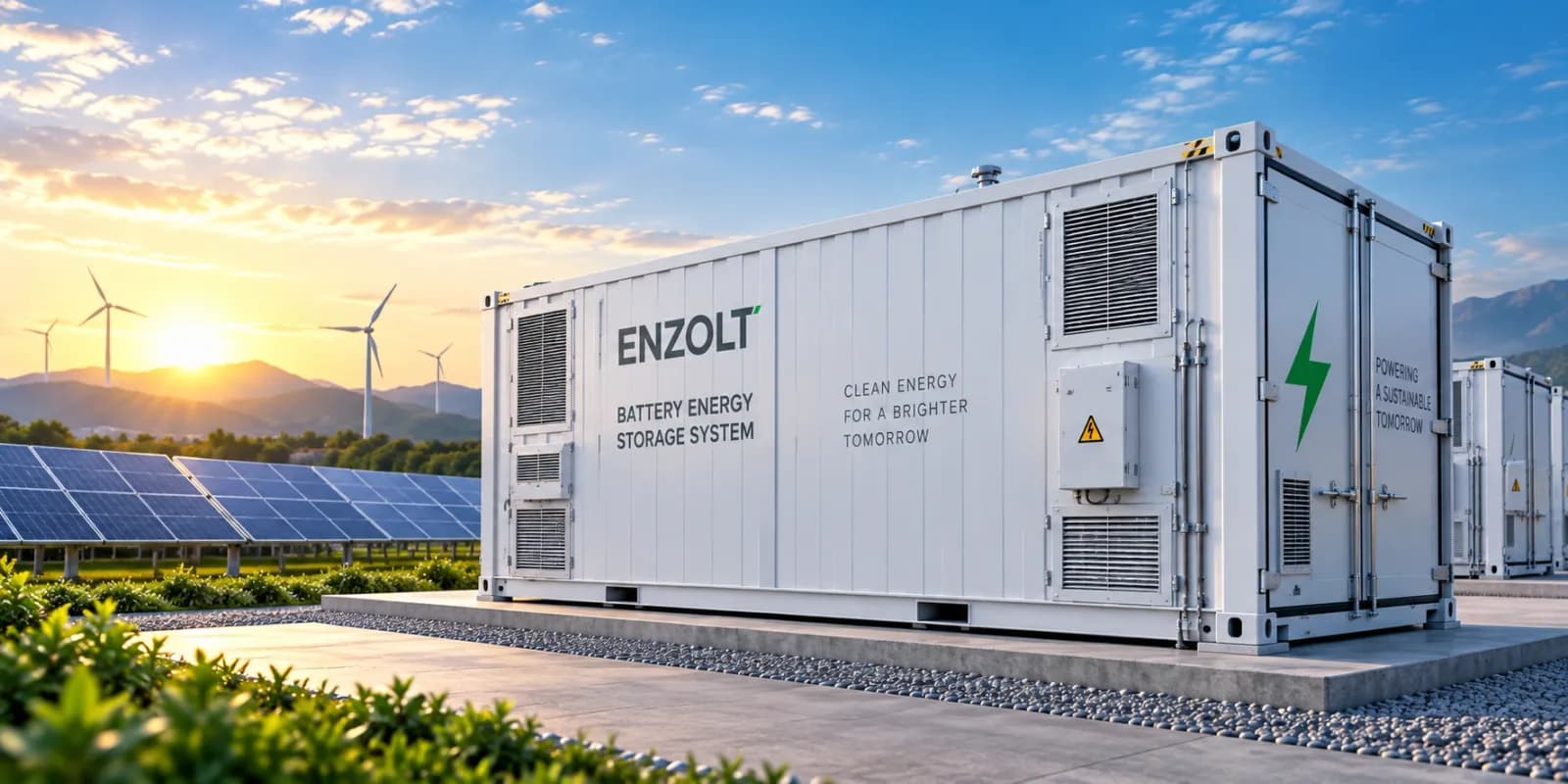
INTEGRATED ENERGY STORAGE
A containerized BESS groups storage and supporting equipment into a coordinated system. The right design starts with how much power your site needs, how long it needs that power and how the system will connect to existing infrastructure.
Battery modules store electrical energy. A battery management system monitors cell conditions and coordinates protection within the battery system.
A bidirectional power conversion system manages charging and discharging, connecting the batteries with the site's electrical system.
Controls coordinate storage operation around the site's loads, generation and operating priorities. Monitoring requirements are defined during engineering.
Cooling, electrical protection and fire detection and response provisions are selected for the battery technology, site conditions and applicable project requirements.
A container enclosure brings equipment together with planned access, cable routing and environmental protection. Layout and service clearances depend on the final design.
Switchgear, metering, communications and any required transformer are coordinated with the site's electrical infrastructure and connection requirements.
APPLICATIONS
Plan storage around building demand, available solar generation and the site's operating schedule.
Support larger energy requirements with storage sized for connected loads, operating cycles and the required discharge duration.
Store a portion of renewable generation for later use and coordinate generation with demand.
Evaluate storage alongside generation and controls for backup or microgrid applications. Islanded operation requires suitable equipment and site engineering.
PROJECT PLANNING
Power capacity (kW) determines how much load a system can support at a time. Energy capacity (kWh) determines how much energy it can deliver. Usable capacity, conversion losses and operating limits affect the achievable duration.
For a project discussion, share your electricity bills or load profile, required backup duration, existing solar or generator capacity, site location and available installation space. Capacity, performance, scope, delivery and commercial terms are confirmed through a project-specific proposal.
Explore solar panel solutions →FROM CONCEPT TO COMMISSIONING
Review consumption data, demand profile, existing generation, site constraints and project goals.
Define power in kW, usable energy in kWh, discharge duration and the electrical connection strategy.
Select compatible batteries, conversion equipment, controls, enclosure and protection systems.
Coordinate civil works, equipment placement, electrical installation and communications.
Verify protection, controls and operating modes, then plan handover and ongoing support.
Talk to Enzolt about an engineered BESS solution for your commercial, industrial or renewable energy application.
Enquire about Containerized BESS